
Tag: BusinessCommunication

  • Why Sales and Marketing Should Never Share a Job Title

    Why Sales and Marketing Should Never Share a Job Title

    At first glance, combining sales and marketing into one role seems like a smart way to stretch your budget. After all, both departments aim to drive growth, right? But here’s the problem: what looks like efficiency on paper often translates to inefficiency in practice. When one person is tasked with both closing deals and building awareness, the result is watered-down performance, missed opportunities, and ROI that never reaches its full potential.


    📖 The Sales-Marketing Split: A Case for Specialization

    Sales and marketing are two engines powering the same vehicle—but they function very differently.

    Marketing is about the long game. It’s strategic, analytical, and focused on building brand awareness, generating leads, and nurturing prospects. Sales, on the other hand, is about momentum. It’s reactive, interpersonal, and laser-focused on conversion and revenue.

    When companies assign both responsibilities to one person—often under the vague title of “Sales/Marketing Manager”—they risk creating a jack-of-all-trades who masters none. That individual is forced to split time between optimizing ad campaigns and chasing quarterly quotas. The result? Neither side performs to its potential.

    Companies don’t save money this way—they just underperform in two critical areas. Marketing campaigns go underutilized, and sales pipelines remain inconsistent. Worse, it becomes difficult to measure what’s actually working.

    By contrast, companies that invest in specialized leadership for both sales and marketing experience sharper focus, clearer accountability, and significantly higher returns.


    📊 Interactive Chart: Comparing Performance Outcomes

    Here’s a data visualization that compares key performance metrics between companies that hire a single Sales/Marketing Manager and those that hire specialized managers for each function.*
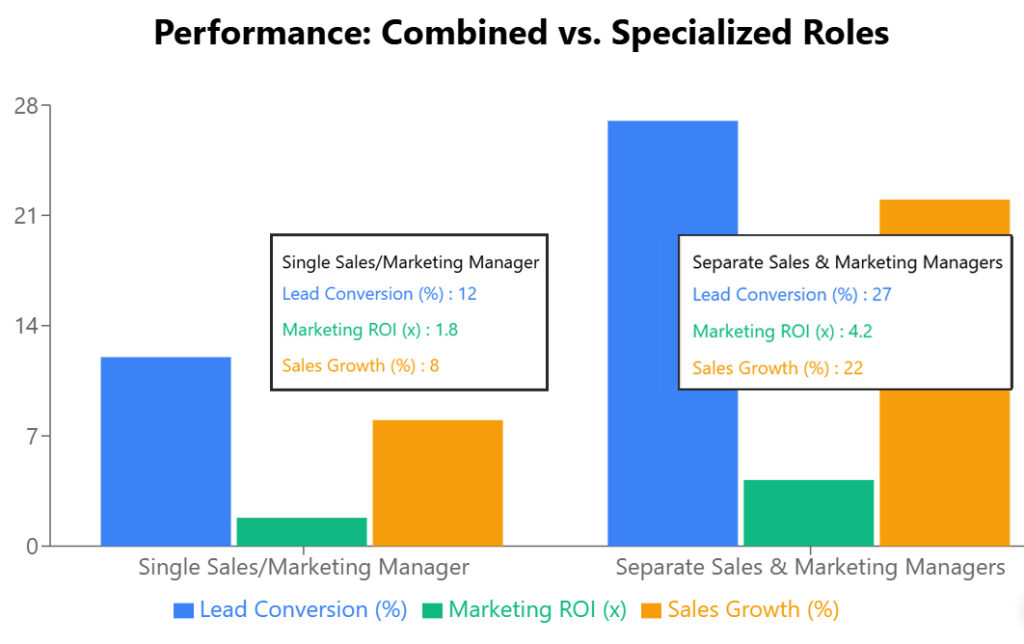
    Performance on job titles
    Performance Combined versus Specialized

    ✅ Final Thoughts: Invest Where It Matters

    The idea that “one person can do both” might make sense when you’re a startup with three employees—but as your business grows, so should your leadership structure. Dividing sales and marketing into distinct, specialized roles isn’t just a structural change; it’s a strategic upgrade.

    The data is clear: focused leadership delivers focused results. Don’t dilute your growth strategy. Invest in dedicated experts—and watch both your pipeline and your brand thrive.

    *Sources used to generate comparison chart:
    📚 Key Industry Sources Used for Modeling

    1. HubSpot – State of Inbound Report
      https://www.hubspot.com/state-of-inbound
    2. Salesforce – State of Sales
      https://www.salesforce.com/resources/research-reports/state-of-sales/
    3. Content Marketing Institute – B2B Benchmarks
      https://contentmarketinginstitute.com/research/

    Set up a meeting!

  • The Importance of Storytelling in Business

    The Importance of Storytelling in Business

    In today’s fast-paced and competitive business landscape, effective communication is more crucial than ever.

    One powerful method that has stood the test of time is storytelling. While data is essential, stories resonate with people on a deeper emotional level. They can inspire, engage, and persuade, driving business success. In this blog, we will explore the importance of storytelling in business and how aligning your narrative with your target audience can enhance your communication strategy.

    People naturally connect with stories on an emotional level.

     From ancient folklore to modern-day films, narratives have captivated audiences across generations. In the business context, storytelling allows companies to present their values, missions, and visions in a relatable way. When a brand shares its journey, struggles, and successes, it creates an emotional connection with its audience. This connection fosters loyalty, as people are more likely to support brands that resonate with their individual experiences and values.

    For instance, consider a company that aims to promote sustainability. By sharing a story about its founder’s journey to reduce waste and protect the environment, the brand can engage customers who are enthusiastic about eco-friendly practices. When people feel that a brand shares their values, they are more inclined to become advocates for that brand.

    Identifying with Your Target Audience

    To maximize the impact of storytelling, it is essential to identify and understand your target audience. What are their interests, pain points, and aspirations? By tailoring your narrative to address these elements, you can create a compelling story that speaks directly to them.

    For example, if your target audience consists of young professionals, you might craft a story that highlights the challenges they face in their careers and how your product or service can help overcome those obstacles. This approach not only highlights your understanding of their needs but also positions your brand as a solution provider.

    Building a Consistent Brand Identity

    Storytelling also plays a pivotal role in establishing a consistent brand identity. Every story you tell should align with your brand values and messaging. This consistency builds trust and credibility over time, making it easier for your audience to recognize and remember your brand.

    A well-crafted narrative can also differentiate your business from competitors. In a saturated market, a unique story can be the deciding factor for potential customers. For instance, if two companies offer comparable products, the one with a compelling story—about their commitment to social responsibility or innovative practices, may stand out and attract more customers.

    Enhancing Employee Engagement

    Storytelling is not just a tool for external communication; it can also enhance internal engagement within organizations. Sharing stories about employees, successes, and challenges fosters a sense of belonging and unity among teams. When employees feel connected to the company’s narrative, they are more likely to be engaged, motivated, and committed to the organization’s goals.

    Moreover, leaders who use storytelling in their communication can inspire their teams and drive cultural change. Whether it is sharing a personal experience or a success story from within the organization, these narratives can reinforce company values and encourage employees to embody those principles in their work.

    Conclusion

    Incorporating storytelling into your business strategy is not just an option; it is a necessity in today’s communication landscape. By connecting with your audience on an emotional level, identifying their needs, and building a consistent brand identity, you can create powerful narratives that resonate and inspire action.

    As you develop your storytelling approach, remember to keep your target audience at the forefront. Engage them with stories that reflect their values and aspirations and watch as your brand transforms into a trusted partner in their journey.

    Key Takeaways

    • Storytelling connects on an emotional level, fostering loyalty.
    • Tailor your narrative to your target audience’s interests and challenges.
    • Consistent storytelling builds brand identity and trust.
    • Engaging stories can enhance employee morale and engagement.

    In summary, the art of storytelling is a powerful tool for any business aiming to connect deeply with its audience and create lasting impact. Embrace it and transform the way you communicate!

    For more information about the author visit: https://gailbourque.com or Set up some time to talk